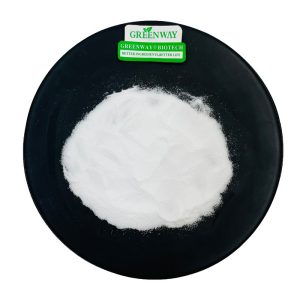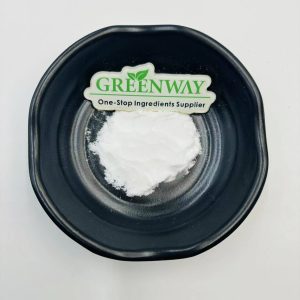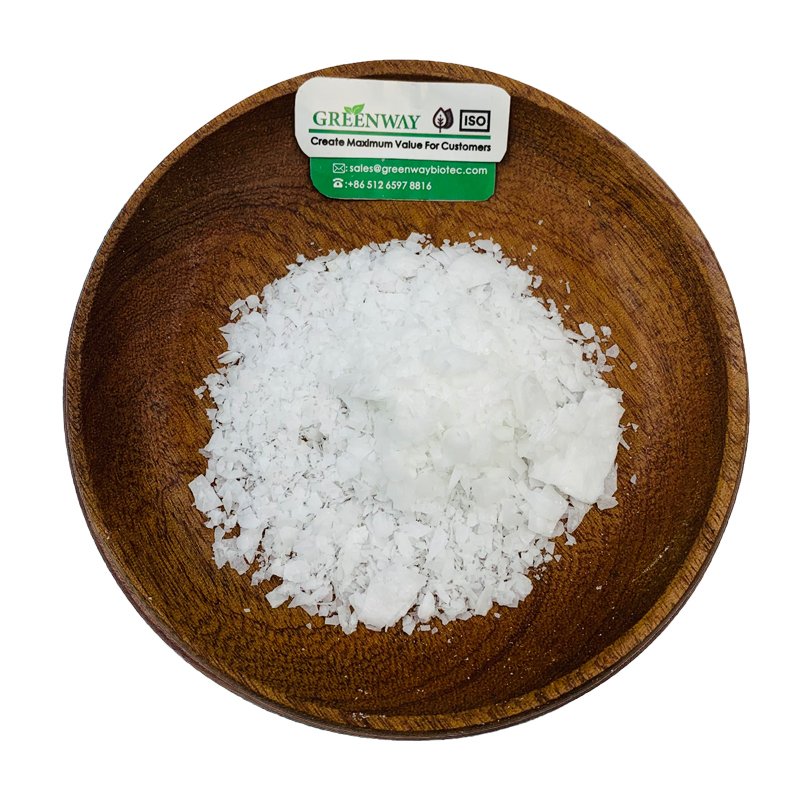
Mequinol, also known as 4-Methoxyphenol, is an organic compound.Mequinol is widely used in skin care and cosmetics for its whitening and antioxidant properties. It can block the formation of melanin and help improve skin tone and pigmentation problems.Mequinol is commonly used in skin lightening products at a 2% concentration. China Mequinol Factory Baisifu can provide mequinol powder and mequinol crystals. You can contact us through the official website or email buy mequinol. Mequinol Wholesale has a better price. We are ISO 9001 & ISO 14001 certified and support COA, MSDS, TDS quality report certificates.Our products are not tested on animals. Free samples available.
Cas No.: 150-76-5
Appearance: White flakes or waxy crystals
Similar Name:4-Methoxyphenol
Solubility:Soluble in acetone, ethyl acetate, ethanol, ether, benzene and carbon tetrachloride
| CAS Number | 2 |
| Appearance | White flakes or waxy crystals |
Benefits:
Mequinol for skin whitening , It can inhibit the activity of tyrosinase, reduce the formation of melanin, and lighten spots, chloasma, freckles, and sun spots.As an antioxidant, Mequinol helps protect the skin from free radical damage and slows down the aging of the skin.
Application:
Whitening serums, lotions, creams and cleansing products (such as mequinol lotion, mequinol cream, etc.)
Package:
1kg/bag; 25kg/Carton.Customization is acceptable.
General Information:
| Cas No.: | 150-76-5 |
| MF: | C7H8O2 |
| MW: | 124.14 |
| EINECS: | 205-769-8 |
| Appearance: | White flakes or waxy crystals |
| Solubility | Soluble in acetone, ethyl acetate, ethanol, ether, benzene and carbon tetrachloride |
| Store | Store in cool dry place away from light, room temperature. |
| Shelf Life | 2 year |
Mequinol: The Active Ingredient Manufacturers Need to Know

What Is Mequinol?
Mequinol is a phenolic compound that you can use in cosmetics to lighten and even out skin tone. It is chemically known as 4-methoxyphenol and has the formula C7H8O2. It presents as white to off-white crystals or flakes. Manufacturers know it by its CAS number, 150-76-5, and its EINECS listing, 205-769-8.
· Mequinol vs. Hydroquinone
Mequinol is structurally similar to hydroquinone, but it has different effects on cellular or regulatory function. Hydroquinone faces strict bans or tight concentration limits across several markets, including parts of the EU. Many of those same areas have different rules about how to regulate mequinol. Due to this distinction, you can use it as a depigmenting performance without hydroquinone’s restrictions.
Mequinol Technical Specifications

Before setting up a test batch, your R&D team needs exact figures. The table below summarizes the core specifications for Mequinol, cosmetic grade, as supplied in bulk.
| Specification | Value |
| INCI / Chemical Name | Mequinol (4-Methoxyphenol) |
| CAS Number | 150-76-5 |
| EINECS Number | 205-769-8 |
| Molecular Formula | C7H8O2 |
| Molecular Weight | 124.14 g/mol |
| Appearance | White to off-white crystals or flakes |
| Purity | ≥99.0% (cosmetic grade) |
| Solubility | Soluble in water, ethanol, and propylene glycol. |
| Melting Point | 53–57°C |
| Storage Condition | Store in cool, dry places that are below 25°C, away from light. |
| Shelf Life | 24 months, in original packaging. |
These figures come directly from the Certificate of Analysis issued with every production batch. Your quality team should be concerned if the purity is less than 99%. Before you sign off on any details on a buy order, ask your supplier for a current COA. Values may change a little from one production run to the next.
Key Features of Mequinol

· How It Targets Melanin Production
Mequinol is a competitive inhibitor of tyrosinase, an enzyme that converts tyrosine to melanin precursors. Your formula will give your skin a tone-correcting effect but will not actually bleach the skin. This mechanism is reported in dermatological clinical literature and is supported by the use of this mechanism at controlled concentrations.
The effect is competitive, so concentration has a predictable effect. It is because of that predictability that you can confidently establish a usage level with your R&D team without having to guess at the results.
· Compatibility with Cosmetic Bases
Mequinol mixes easily with both water-based and alcohol-based bases. At normal use levels, it doesn’t need any extra solubilizers. Your existing serum or lotion base likely needs no reformulation to accommodate it.
You can use mequinol in only oil-based and emulsion systems with only small changes to the order of mixing. When you add mequinol to a stable base, it doesn’t usually cause a full reformulation cycle.
· Oxidative Stability Profile
Exposure to light and air gradually degrades mequinol’s activity. You can extend the shelf life and performance by combining opaque packaging and antioxidants. If you store a formulation that isn’t protected from UV light, it will lose its effectiveness faster than the label claim allows.
In this case, glass or dark plastic containers work better than clear ones. Before you choose a main container, your packaging provider should confirm that it meets the light-blocking requirements.
Benefits of Mequinol for Your Product Line

· A Safer, Less-Restricted Alternative
Hydroquinone is not used at all in certain cosmetics markets; in others, the amount is strictly regulated. In similar countries, Mequinol is not subject to many of those limitations. You and your formulation team have the advantage of not having to rethink the entire formulation of the active complex.
You could extend your current brightening line to markets where the use of hydroquinone is increasingly regulated with just one change. Such continuity is one way to safeguard your income.
· Stronger Tone-Correcting Claims
Documented evidence of tyrosinase inhibition allows for the use of an exact, justifiable label for the product. Instead of using general descriptions such as `brightening’, you should provide messages that reference `melanin pathway’ action.
This specificity is critical when working with legal counsel to review marketing copy prior to product launch. Printed claims supported by a named mechanism also provide better support when presented to retailers or regulators. Your marketing department will be provided with a term that it can substantiate rather than merely sound appealing.
· Format Versatility
Whether it is in serums, creams, lotions, or targeted spot treatments, mequinol is effective. Hair and scalp formulations also include mequinol for localized lightening effects. It is an active ingredient that has multiple uses means simple sourcing and fewer SKUs. Fewer raw materials to qualify and track means your procurement department has less to do.
Where Mequinol Fits in Your Formulations

· Skin Care Serums and Creams
Most of the time, serums and night creams that you leave on contain mequinol. It works well in products that try to get rid of age spots, sun spots, and uneven skin tone because it stops tyrosinase from doing its job. Adding while the part cools down keeps the work going for the rest of the manufacturing process. When used every day, it helps keep the skin soft when mixed with a humectant base.
· Brightening Cosmetics
Spot-correcting gels and targeted brightening sticks benefit from mequinol’s concentrated action. Pairing it with an AHA exfoliant, such as mandelic acid, can support cell turnover alongside pigment correction.
Your combination formulas often outperform single-active products on visible results. Your positioning team can market this stacking approach as a more complete brightening system.
· Hair and Scalp Care
Mequinol sees secondary use in hair-lightening and scalp-tone formulas, a smaller but growing segment. Formulators pair it with conditioning actives like panthenol to offset any drying effect. Your hair care line gains a documented active rather than an unproven botanical claim. This segment remains niche today, but interest from clean-label hair brands is increasing steadily.
· Other Industrial Uses
In addition to its personal care applications, mequinol is used in a limited number of industrial and polymerization-inhibitor applications that are outside the scope of cosmetics. Typically, cosmetic manufacturers will not require this use case directly. It’s only helpful if you’re using adjacent product lines at your facility. This distinction is important to keep in mind to prevent confusion when obtaining grades for various applications.
Mequinol Compliance by Region

· US (FDA) Requirements
The FDA permits mequinol in OTC drug products at concentrations up to 2%, a reference point many formulators use for guidance. Cosmetic-only claims require careful wording to avoid drug classification. Review current FDA cosmetics guidance before finalizing any US label.
Crossing into drug-claim territory, even unintentionally, can trigger a far longer approval process. Your legal team should sign off on final wording before any label goes to print.
· EU Cosmetics Regulation
EU rules treat mequinol differently from hydroquinone, though restrictions still apply by product category. Verification through the CosIng database confirms the current status before you commit to a formula. Your regulatory affairs contact should check this listing for every new SKU.
Regulations are updated periodically, so a status check from last year’s launch may no longer apply. Building this check into your standard launch checklist avoids last-minute surprises.
· China and ASEAN Rules
China’s cosmetic rules demand that the ingredients be registered prior to the product being placed on the shelves of local cosmetic stores. Generally, the ASEAN market adopts harmonized cosmetic directives with country-specific steps for filing. These approvals should be taken into account as part of your launch calendar at the earliest opportunity.
On many occasions, manufacturers miss this, and they end up experiencing shipment delays at customs instead of at the manufacturing plant. The most important step in protecting your own launch date is planning around the region in which the filing is timed.
How to Formulate with Mequinol

· Recommended Usage Levels
In most cosmetics, mequinol is present in the range of 0.3% to 2.0%, depending on the type of cosmetic product and the regional limits. Those with less concentration are suitable for daily leave-on products. Treating at higher levels is only appropriate for targeted, limited use.
Formulation is more cost-effective, with a new formula initiated at the bottom of the ramp and adjusted after stability testing. A documented usage rationale also speeds up internal regulatory sign-off.
· Best Incorporation Method
Add mequinol during the cool-down phase, below 40°C, to protect its activity. Dispersion is improved by predissolving it in a small amount of the water phase. It cannot be added too early (during the heated processing), as this leads to degradation and loss of active material.
A simple temperature log during production catches this mistake before an entire batch is compromised. Operators trained on this single checkpoint prevent most avoidable losses.
· Pairing with Stabilizers
Shelf life- extending antioxidants include sodium metabisulfite or tocopherol to reduce oxidative breakdown. A stable vitamin C derivative can help the brightening effect without affecting the stability. Do test runs at the lab level before running a full batch with a stabilizer mix.
Record the outcome so that future reformulations don’t begin trial testing all over again. That record will come in handy when your team launches a similar product again.
Choosing the Right Mequinol Supplier

· Documents to Request
You must request a current Certificate of Analysis, a Safety Data Sheet, and a Technical Data Sheet before ordering mequinol. These three documents are all proof of purity, handling, and storage conditions. A supplier unwilling to provide all three is not worth your procurement time. Save these records for each order – not only the initial order.
· Purity and Batch Consistency
You must ask for purity data from the three most recent batches instead of one reference batch. Consistency across batches matters more than a single impressive number. Variation indicates something is wrong in the supplier’s process control. If your supplier is willing to share and track the batch trends transparently, it will be easier to work with in the long-term.
· MOQ and Lead Time
You must check the minimum order quantity and lead time before your production schedule is finalized. Smaller trial orders allow your team to test the performance first before committing to bulk volume. Ask whether sample quantities are available at no cost. Lead time estimates should account for both production and shipping, not production alone.
· Supplier Red Flags
Vague answers about manufacturing location or certification status are a warning sign. The prices that are significantly lower than the market price indicate that the material may have been thinned or improperly stored. Always confirm any deposits in writing. A supplier who pressures you to skip documentation review is rarely one worth keeping long term.
Why Purchase a Bulk Order from Baisifu

At Baisifu, we manufacture mequinol under ISO 9001 and ISO 14001 certified processes at our Suzhou facility. Details are on our Why Us page. Every batch ships with a complete CoA, SDS, and TDS, plus FDA-registered facility documentation on request. Our MOQ accommodates both trial runs and bulk production, with lead times confirmed before you order.
Free samples are available for qualified manufacturers who want to validate performance before committing to volume. Documentation turnaround is typically fast, since every batch record stays on file at the point of production. Reach our technical sales team to request documentation or a bulk quote today.
FAQs
How should Mequinol be stored?
You should keep mequinol in a cool and dry place, out of direct sunlight and below 25°C. Keep in original, tightly closed containers to minimize exposure to air and moisture. With correct storage, potency will be maintained throughout the entire 24-month shelf life your supplier guarantees.
Is Mequinol soluble in water?
Yes, mequinol is water soluble, as well as in ethanol and propylene glycol. This solubility makes it compatible with the majority of cosmetic bases used in cosmetics that are either aqueous or hydroalcoholic. For general formulations, no special solvent system is usually necessary.
What is the difference between mequinol and arbutin?
Mequinol works by directly inhibiting tyrosinase, whereas arbutin is a slow-release form of hydroquinone. Generally, mequinol is more active at lower use rates. Instead, arbutin is frequently used for less intense, more sustained brightening effects.
Is it possible to use Mequinol with other actives, such as vitamin C?
Yes, mequinol can be used together with stable vitamin C derivatives to enhance brightening compositions. The complementary mechanisms can be used to support the combination in tone correction. The use of lab-scale stability testing is still recommended prior to finalizing a combined formula.
Does Mequinol require special handling during formulation?
To prevent loss of activity, Mequinol should be added during the “cool-down” phase (below 40°C). Exposure to light should be avoided in processing as much as possible. Other than these two, most production teams can handle it with ease.
Browse Baisifu’s FAQ page for additional sourcing and documentation questions.
Categories:
Cosmetic IngredientsQuick Inquiry
Interested in this product? Send us a message for pricing and samples.
Contact Info
Email:
danny@baisfu.com
kenny@baisfu.com
Phone:
+86-29-81110978
Mobile:
+86-13072980070 (Danny)
+86-13519147002 (Kenny)