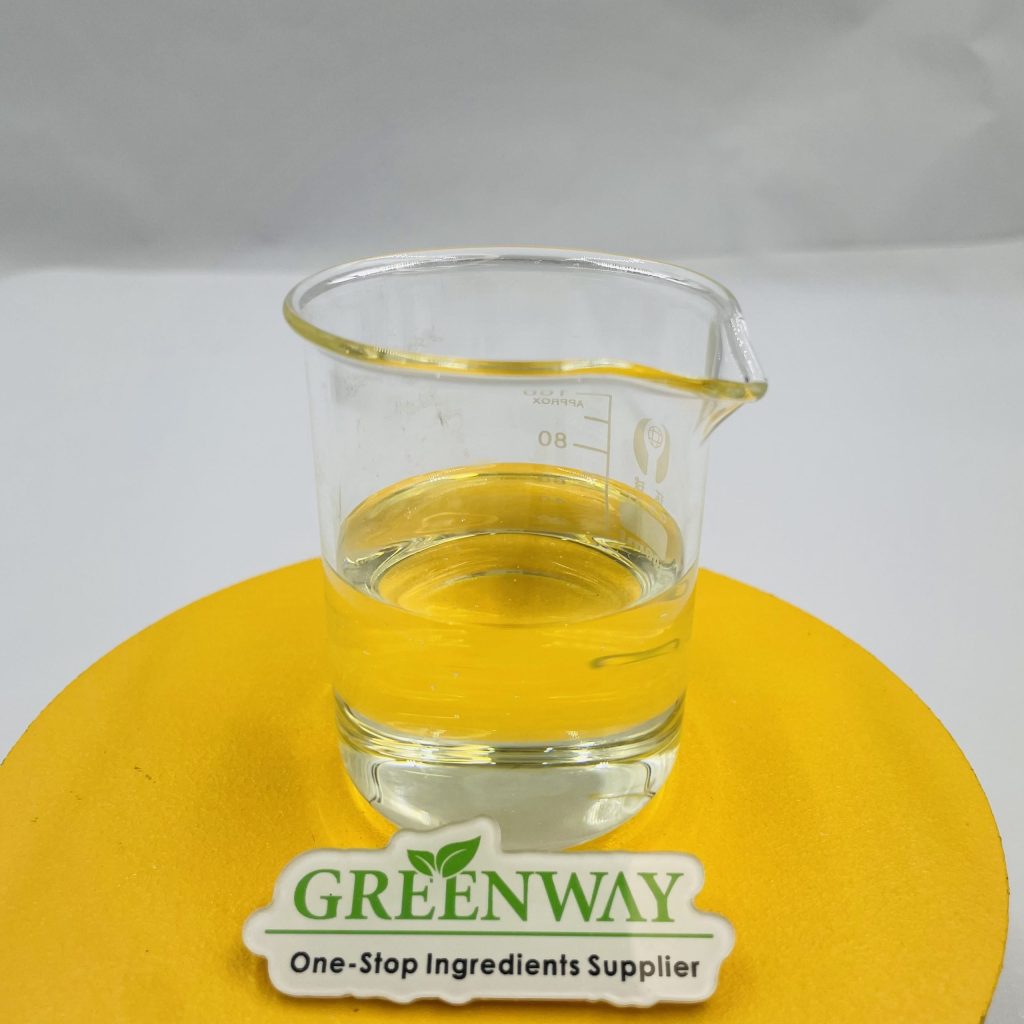
Cinnamaldehyde is mainly extracted from the bark of cinnamon plants (Cinnamomum spp.), and the essential oil of cinnamon bark contains about 90% cinnamaldehyde. Trans cinnamaldehyde is an organic compound with a cinnamon aroma. It is easily soluble in ethanol, ether, chloroform and oils, but difficult to dissolve in water and glycerin. Cinnamal is widely used in cosmetics and skin care products due to its unique fragrance and bactericidal, antioxidant and anti-inflammatory properties. Baisifu has passed ISO 9001 & ISO 14001 certification, product quality is guaranteed, COA, MSDS, TDS quality reports are complete. China Cinnamaldehyde Factory provide you with pure Cinnamaldehyde. Our products are not tested on animals. Free samples available.
Cinnamaldehyde CAS No.:104-55-2
Appearance: Light yellow oily liquid
Similar Name: cinnamal
Solubility:Poorly soluble in water
| CAS Number | 2 |
| Appearance | Light yellow oily liquid |
Cinnamaldehyde Benefits
1. Antibacterial effect: Cinnamaldehyde can effectively inhibit the growth of bacteria and fungi and extend the shelf life of the product.
2. Antioxidant ability: Cinnamal can reduce the damage of oxidative stress to skin cells, delay skin aging and reduce the formation of wrinkles.
3. Anti-inflammatory properties: It can reduce the skin’s inflammatory response and relieve skin redness, swelling, itching and other problems.
4. Aromatic properties: cinnamal has a strong cinnamon aroma and can increase the aroma of the product.Cinnamaldehyde is an important spice raw material
5. Whitening and Brightening: Its antioxidant and anti-inflammatory properties can improve the overall condition of the skin and reduce pigmentation, thereby lightening spots and brightening the skin tone.
Application:
Soap, laundry detergent; perfume, fragrance products; essence, lotion; toothpaste, shampoo and hair care products; massage lotion, etc.
Package:
1kg/bottle; 25kg/Drum;If you have other packaging requirements, please contact us.
General Information:
| Cas No.: | 104-55-2 |
| MF: | C9H8O |
| MW: | 132.16 |
| EINECS: | 203-213-9 |
| Appearance: | Light yellow oily liquid |
| Solubility | Poorly soluble in water |
| Store | Store in cool dry place away from light, room temperature. |
| Shelf Life | 2 year |
Cinnamaldehyde: A Cosmetic Ingredient Guide for Manufacturers

What Is Cinnamaldehyde?
Cinnamaldehyde (CAS 104-55-2) is a cosmetic ingredient that occurs naturally in cinnamon bark and is used in skin care, hair care and cosmetics. It provides antimicrobial defense, warm fragrance character and antioxidant activity from one raw material source.
This means you only need to source one input, it cuts down on formulation costs and speeds up development timescales. It directly boosts your margins, clean-label positioning and speed to market.
Key Features That Matter to Formulators

Most raw materials have one single function. Here are four reasons to source cinnamaldehyde at scale.
Broad-Spectrum Antimicrobial Activity
Cinnamaldehyde is active against gram-positive and gram-negative organisms. It does so by affecting the bacterial cell membrane and prevent the formation of fungus biofilm. It is a direct benefit for formulators working with preservation systems in clean beauty and natural cosmetics markets. It reduces dependency on synthetic preservatives.
Warm, Spicy Fragrance Profile
The signature warm, spicy scent of cinnamaldehyde is commercially recognized in fragrance categories from perfumery to functional body care products. It provides real olfactory complexity to your blends at low concentrations without the need for additional aroma chemicals so reduce your fragrance cost.
Mild Skin-Warming & Circulation-Stimulating Effect
The cinnamaldehyde activates the TRPA1 in the skin that causes a slight warming sensation and stimulate the local blood flow directly. It is commercially valuable for warming creams, massage oils, scalp treatments and body care products with a claim of circulation benefit.
Antioxidant & Free Radical Scavenging Capacity
The aldehyde structure of cinnamaldehyde makes it a potent free radical scavenger. This allows it to directly interact with oxidative stress pathways in the skin tissue. Your product has a science-based antioxidant claim for anti-aging and skin protective formulations. This can elevate the perceived clinical value of your product.
Natural vs. Synthetic: Which Grade Fits Your Line?

Your choice of grade will decide your product positioning, cost structure and regulatory path.
Natural-Derived Cinnamaldehyde
Natural cinnamaldehyde is obtained from cinnamon bark by steam distillation. This adds a true plant-derived story to your formula. It is priced at a premium price point and has some minor batch to batch variability. It is more suitable for premium or natural cosmetic lines.
Synthetic (Lab-Grade) Cinnamaldehyde
Synthetic cinnamaldehyde is the same chemical profile as natural cinnamaldehyde but at a lower cost and with uniform GC purity from batch to batch. This grade minimizes your supply chain risk and maintains the cost-per-formula predictability for high volume manufacturers.
Alpha-Amylcinnamaldehyde
Alpha-Amylcinnamaldehyde is the perfect derivative for leave-on and sensitive-skin applications where the concentration range limitations of regular cinnamaldehyde restrict your choices. It has a milder sensitization profile and retains the warm, cinnamaldehyde-like fragrance character.
How It Actually Performs in Your Formulations

Cinnamaldehyde is not a passive additive. Here’s what it actually gives you on a cellular level.
Mechanism of Action on Skin & Scalp
Cinnamaldehyde activates TRPA1 receptors in the skin and scalp tissue, resulting in vasodilation and increased blood flow to the hair follicles. At the same time, it inhibits NF-κB pathways. This exerts an anti-inflammatory effect that reduces scalp irritation and promotes skin barrier repair. This dual activity makes it a scientifically credible active in formulations for scalp health for your team.
Ingredient Compatibility. What Works With It
Cinnamaldehyde is compatible with carrier oils, tocopherol and most emulsifiers when added during the cool down phase below 40°C. A good partner for salicylic acid and zinc-based actives, it’s used in scalp treatment and anti-dandruff formulas that broadens your claim territory. Do not use it in high pH systems above pH 9 and strong oxidizing agents as these degrade its aldehyde structure and active performance.
Where Can You Use Cinnamaldehyde in Your Products?

There are not many cosmetic actives that cross three major product categories. Cinnamaldehyde does, and each category provides a different angle for your line.
Skincare: Serums, Creams & Body Care
In skincare cinnamaldehyde blends seamlessly into anti-aging serums, warming creams and body care products as a multi-function active. It has skin-warming and free radical scavenging activity at a level below the threshold for leave-on sensitization (0.01–0.1%). Warming massage oils and body care lines are differentiated considerably on the market by the vasodilatory response it triggers on contact.
Cosmetics: Lip Products, Perfumes & Fragrance Blends
Cinnamaldehyde gives lip balm and gloss a warm fragrance character and a mild plumping effect due to localized stimulation of circulation. In perfumery and fragrance blends, it imparts a warm spicy character that reduces your reliance on additional aroma chemicals. Maintain concentrations within IFRA guidance for lip contact applications to maintain regulatory clearance in your target markets.
Hair Care: Scalp Treatments & Growth Stimulants
Cinnamaldehyde has the greatest commercial promise in hair care products, especially those that treat the scalp, fight dandruff, and act as hair growth serums. Its antifungal activity against Malassezia makes it a credible functional active in anti-dandruff shampoos and scalp health formulas. Combine with biotin or caffeine to form a scalp circulation formula with defensible claims for hair growth.
Formulation Tips & Recommended Usage Rates

By concentrating and processing it correctly, you directly protect your formula’s efficacy and regulatory status. This is the formulation guidance your team needs to hear.
How Much to Use: Concentration Guide by Product Type
For leave-on skincare products, keep cinnamaldehyde in the 0.01% to 0.1% range to maintain sensitization safety margins. Rinse-off formats such as shampoos, conditioners and scalp treatments can easily accommodate concentration rates of 0.5% to 1.5%. Massage oils for warming can be used up to 2%, while lip products have to stay within IFRA’s top maximum of 0.07%.
Ingredient Compatibility & What to Avoid
Cinnamaldehyde is compatible with carrier oils, tocopherol, most emulsifiers, and botanical extracts in the standard oil and water phases. Do not use in combination with oxidizing agents, amine based compounds or reactive metal ions, as they will degrade its aldehyde structure and decrease its efficacy. For microencapsulation systems, ensure that your shell material is chemically inert in order to preserve active integrity for the full shelf life.
pH Range, Heat Stability & Emulsion Behavior
Cinnamaldehyde is most stable at pH between 4 and 7. It will begin to degrade at pH above 9. Always add in the cool down phase below 40°C as heat above this point compromises both aroma profile and active performance. In emulsions, it partitions into the oil phase, so use a solubilizer for aqueous systems.
Safety Profile & Skin Sensitization Risks

Cinnamaldehyde is a known contact allergen. Knowing the sensitization threshold will dictate how confidently you can formulate with it.
Known Allergen Status & Patch Test Protocols
Cinnamaldehyde is an EU declared skin sensitizer, requiring label disclosure above 0.001% in leave-on formulations under EU Cosmetics Regulation (EC) No 1223/2009. For rinse-off products the declaration threshold goes up to 0.01% which gives you more room to develop your wash-off products. Test all leave-on formulations with a patch test protocol and validate the results before market launch.
Safe Concentrations vs. Sensitization Threshold
Formulations at or below 0.01% have minimal elicitation risk for most consumers. Cinnamaldehyde has a sensitization threshold of approximately 0.01%. For sensitive skin populations, keep your concentrations far below this threshold and validate with a qualified dermatologist challenge study. Before going to full-scale production, always run a small batch test.
Regulatory Compliance Across Key Markets

Your compliance requirements change with every market you enter. This is where cinnamaldehyde comes in as one of the main ones.
EU Cosmetics Regulation (EC 1223/2009)
Cinnamaldehyde is listed in Annex III of EU Cosmetics Regulation and labeling as an allergen is required above 0.001% in leave-on products and 0.01% in rinse-off products. For the EU markets, your formulations have to meet the wider fragrance allergen disclosure and product safety reporting requirements of REACH legislation.
IFRA Standards & Usage Restrictions by Category
IFRA restricts cinnamaldehyde across product categories, with concentration limits ranging from 0.01% for eye-area leave-ons to 0.3% for rinse-off hair care. Lip products have a tighter ceiling of 0.07% so make sure to check your IFRA category before you decide on your final concentration.
US, China & Global Market Requirements
The FDA has classified cinnamaldehyde as GRAS (Generally Recognized As Safe) for food-grade use in the US, and there are no pre-market regulatory requirements for cosmetic use. In China, your formula must go through a safety evaluation and be notified to NMPA before launching. When rolling out globally, make sure your compliance documentation is consistent with the most stringent regional standard.
Storage, Handling & Shelf Life

How you store the cinnamaldehyde will dictate what level of purity is found in your formula. That’s how you protect every batch.
Correct Storage Conditions to Preserve Purity
Store in closed containers, in amber glass or lined containers, below 25°C, away from light, heat and oxidizing agents. Storage should be tightly sealed and areas of handling should be well ventilated to maintain active integrity and workplace safety due to high vapor pressure.
Shelf Life & Signs of Degradation
Cinnamaldehyde, when stored properly, has a shelf life of 12 to 24 months from date of manufacture and retains its GC purity and active performance. Signs of degradation are darkening from pale yellow to amber, changes in the aroma profile towards off-notes and a measurable drop in GC purity.
Why Purchase a Bulk Order from Baisifu

We sell cinnamaldehyde at wholesale manufacturer prices to manufacturers of skincare, cosmetics and hair care all over the world. With every batch shipped you can receive a complete COA, Safety Data Sheet and Technical Data Sheet for your QC team.
We are ISO 9001 and ISO 14001 certified and every batch has a traceable quality audit trail. Your production team receives consistent GC purity data with each dispatch, consistently supporting sign-off.
The minimum order is 1 kg, allowing your formulation team to validate with production-grade material before scaling. Request a free sample or a bulk quote today and test our quality.
FAQs
Cinnamaldehyde vs Cinnamon Oil — what’s the difference?
Cinnamon oil is a botanical extract, whereas cinnamaldehyde is the purified active ingredient. Direct sourcing provides a cleaner declaration of your formula and consistent batch performance.
What is the safe concentration of Cinnamaldehyde in hair care?
The commercially proven range for rinse-off hair care is between 0.5% and 1.5%. Leave-on and scalp treatments should be kept under 0.5%, to reduce the risk of sensitization.
How to store Cinnamaldehyde safely?
Store cinnamaldehyde below 25°C in sealed amber containers, away from heat, light and oxidizing agents. Proper storage maintains GC purity and active performance.
Where to buy Cinnamaldehyde in bulk from China?
Baisifu is a cinnamaldehyde manufacturer in China for wholesale cinnamaldehyde bulk orders. Our worldwide shipping of 1 to 3 days with no markup.
How does Cinnamaldehyde work as a natural preservative?
It disrupts the microbial membrane and inhibits the fungal biofilm (cinnamaldehyde), suppressing bacteria and fungi at low concentrations. This lends credibility to natural preservative claims in your clean beauty formulations.
Categories:
Essential OilQuick Inquiry
Interested in this product? Send us a message for pricing and samples.
Contact Info
Email:
danny@baisfu.com
kenny@baisfu.com
Phone:
+86-29-81110978
Mobile:
+86-13072980070 (Danny)
+86-13519147002 (Kenny)