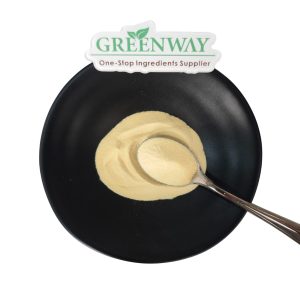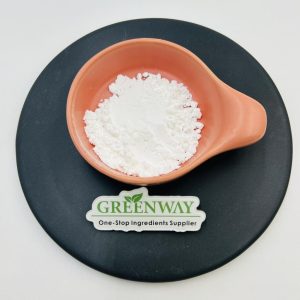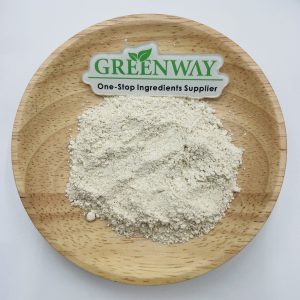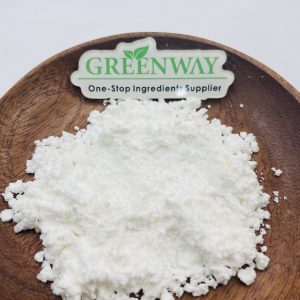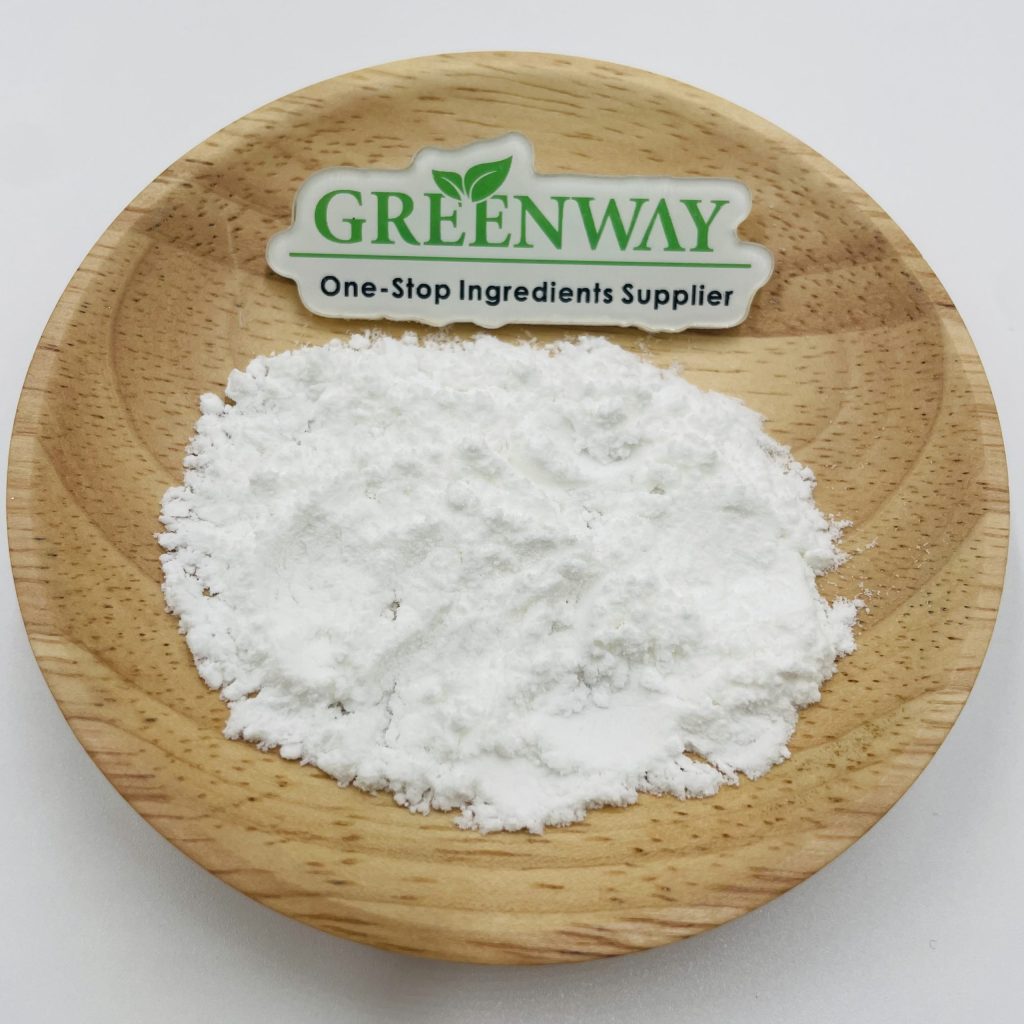
Ascorbyl glucoside AA2G Powder is a Vitamin C derivative. Compared to the traditional Vitamin C form, Ascorbyl glucoside is more stable, making it easy to formulate. It is also gentle on the skin, making it a popular ingredient for cosmetics or skin-lightening products.
This compound has high water solubility. It can be paired with glucose and ascorbic acid to improve skin penetration, allowing a long-lasting benefit.
CAS Number: 129499-78-1
Appearance: White to off-white powder
Trade Name: AA2G
| CAS Number | 2 |
| Appearance | : White to off-white powder |
Benefits of Ascorbyl Glucoside
Baisifu is a trusted supplier of ascorbyl glucoside that can protect the skin from harmful sun rays.
This compound also acts as an effective anti-oxidant, providing wrinkle-free skin and enhancing collagen synthesis.
Ascorbyl glucoside is also known for its skin-lightening properties. It can effectively reduce dark spots and slow down melanin production.
Using our ascorbyl glucoside in skincare and cosmetic products will help revitalize skin, making it more glowing, youthful, and radiant.
General Information
| Molecular Formula | C12H18O11 |
| Molecular Weights | 338.26 |
| Melting Point | 158-163℃ |
| Solubility | Water Soluble |
| Purity | 99% |
| Suggested Usage | 0.5% – 2.0% |
| pH Value | 2.1 ~ 2.5 |
Ascorbyl Glucoside AA2G Powder | Stable Vitamin C Derivative for Cosmetics

Why Your Vitamin C Formulas Keep Failing
Vitamin C is the boosting ingredient that businesses want the most, and it is active on the market. If you are using L-ascorbic acid in your formulation then you might be facing oxidation issues. It draws away your profits, leads to complaints, and delays product launch.
· The Real Business Cost of Unstable Vitamin C
L-ascorbic acid oxidation doesn’t just effect your formula aesthetically, it cause a number of issues. For example, if you are facing yellow discoloration issue in your serum due to L-ascorbic acid then you should shift to a better alternative. AA2G powder is what you need to protect all of your SKUs.
· Why the Industry Moved Away from L-Ascorbic Acid
L-ascorbic acid demands a low pH to stay active that put it in direct conflict with skin-compatible formulas. When your serum turns yellow, it means that the batch has to be rejected, production stops, and you have to do more work on the ingredient. The price of reformulating goes up for every SKU that is affected.
If you are undergoing the same issues or planning to take precautionary steps to protect your product integrity, we recommend you to switch to a better, stable alternative which is Ascorbyl Glucoside (AA2G).
How AA2G Actually Delivers Vitamin C Into the Skin

Every formulator knows Vitamin C works. What separates a high-performing product from an average one is how efficiently your chosen derivative actually delivers it.
· The Enzyme Release Mechanism — Simply Explained
As free Vitamin C, AA2G doesn’t get into the skin. After being swallowed, α-glucosidase enzymes found naturally in keratinocytes break down AA2G. It breaks the link between glucose and ascorbic acid, allowing it to work immediately.
It helps you in achieving longer shelf life and cleaner formulas for your products. With AA2G all of these claims are not just words they are the reality.
· What “Time-Release” Means for Your Label Claims
The sustained-release nature of ascorbic acid gives you the ingredient effectiveness data to back up the marketing claim that time-release vitamin C works really well. If you make your claims legal, believable, and commercially attractive by using AA2G in your products.
· Bioconversion Rate — What the Data Actually Shows
In vitro bioconversion tests show that AA2G changes into free ascorbic acid at a steady, measurable rate in epidermal layers that are high in keratinocytes. The AA2G clinical data gives your R&D team strong proof of effectiveness that can be used for both internal validation and selling to other people.
AA2G vs. Other Vitamin C Derivatives — Choose Right

The Vitamin C derivative market has expanded significantly, and that gives you more precise formulation options than ever before. Here is how AA2G positions itself within that landscape.
Stability, pH Range & Solubility — Head-to-Head
AA2G is a Vitamin C compound that dissolves in water and stays stable at a formulation pH of 5 to 7. This is the ideal pH range for skin-friendly cosmetics. Unlike options that need acidic environments or oil-phase incorporation, AA2G mixes easily into water-based systems without changing the structure of the formula.
When the pH is normal, the product is stable, which gives you more options for how to make it and allows it to last longer.
| Derivative | Solubility | Stable pH Range | Key Limitation |
| AA2G (Ascorbyl Glucoside) | Water-soluble | 5–7 | Requires enzymatic conversion |
| L-Ascorbic Acid | Water-soluble | 2.5–3.5 | Highly unstable, oxidizes rapidly |
| Ascorbyl Palmitate | Oil-soluble | 4–6 | Limited aqueous use, lower stability |
| Sodium Ascorbyl Phosphate (SAP/MAP) | Water-soluble | 6–7 | Lower bioconversion efficiency |
| Ethyl Ascorbic Acid | Water-soluble | 4–6 | Higher cost per use |
When is AA2G the Definitive Best Choice?

AA2G is the best option for premium daily brightening serums, anti-aging creams, and sensitive-skin formulas.
- AA2G Vs. SAP: While SAP is excellent specifically for acne-prone skin due to its mild antimicrobial properties but it requires a higher pH (~7.0) to stay stable. AA2G is much more versatile and can maintain stability at a skin-natural pH of 5.0 to 6.0.
- AA2G Vs. Ethyl Ascorbic Acid (EAA): EAA is a fast-acting derivative, but it carries a higher cost per use and can cause a stinging sensation on sensitive skin. Using AA2G in your product you can deliver a much smoother sensory profile at a lower formulation cost.
Limitations of AA2G
The main critique of AA2G is that it is a “prodrug” which means it cannot work on the skin immediately. It relies on the skin’s native alpha-glucosidase enzymes to slowly break down the glucose molecule and release the active Vitamin C.
- The Reality: This means AA2G will not give a sudden, aggressive burst of antioxidant activity. It is a slow-and-steady ingredient.
- The Formulation Solution: You can turn this limitation into a product benefit by marketing it as a time-released, all-day reservoir of Vitamin C. It eliminates the “irritation spike” that causes redness in traditional Vitamin C serums. To optimize this conversion rate in your formula, pair AA2G with mild chemical exfoliants (like gentle AHAs or PHAs) or cellular turnover boosters to make sure the skin is prepared for enzymatic activity.
Your Complete Formulation Guide for AA2G Powder

We wrote this guide for the skin care/beauty product manufacturers who are actively looking for a Vitamin C ingredient to boost their market worth. AA2G can help you get your method right the first time and protect the integrity of your batch.
1. Optimal pH, Heat Stability & Process Tips
Keep the pH of your solution between 5 and 7. This is the best pH range for AA2G powder and the longest shelf life. Never add AA2G to the oil phase; always add it to the water phase as a solution that has already been mixed with water. It can be processed up to 80°C because it is very stable at high temperatures, but we suggest adding it in the cold process below 40°C because it is the best way to keep all of its activity.
2. Ingredients That Work Well With AA2G
If you manufacture brightening serums, AA2G paired with alpha arbutin creates a dual-pathway approach to melanin suppression that your formulas will visibly benefit from.
Working with a niacinamide or hyaluronic acid base?
Both whitening and moisturizing claims are stronger with AA2G. The AA2G ferulic acid combination, which can be expanded with Vitamin E, if desired. It creates a Vitamin C formula that works in multiple ways and has good clinical positioning for antioxidant-rich products.
3. What to Avoid in the Same Formula
Stay away from the supporting ingredients with a high alkaline pH. Going above pH 7 speeds up the breakdown of AA2G and lowers the yield of your bioconversion. Oxidizing agents and strong chelating agents should not be used together because they both affect the stability of AA2G at the molecular level.
Not taking these steps not only makes your formula less effective, but it also invalidates the claims on the label that your formula was based on. Our technical team is ready to look over your formulation if you need help figuring out which ingredients don’t work with your present system.
4. Recommended Usage Levels by Product Type
Your target concentration depends on your product format and the efficacy claim you are building toward. Here is where to start:
- Brightening serum: 1.0% to 2.0% — your optimal serum active level for visible skin tone results and strong label claim support.
- Moisturizer: 0.5% to 1.0% — an effective AA2G in moisturizer dosage that balances cost efficiency with measurable brightening activity.
- Toner/essence: 0.5% to 1.0% — the ideal AA2G toner concentration for lightweight, daily-use brightening formats.
- Shampoo/scalp treatment: 0.1% to 0.5% — a cost-effective dose that delivers antioxidant and color-protection benefits without formula overload.
- Sunscreen / SPF base: 0.5% to 1.0% — sufficient to support photoprotection claims while maintaining formula compatibility.
Here is the recommended usage level of AA2G for various other products as well.
| Product Type | Recommended AA2G Usage Level |
| Eye Cream | 0.5% – 1.0% |
| BB Cream / CC Cream | 0.5% – 1.0% |
| Sheet Mask / Ampoule | 1.0% – 2.0% |
A Tip: Get your usage level right the first time. It is the single formulation decision that directly impacts both performance and profitability.
Which Product Lines Can You Build with AA2G?

If your business operates in any of the categories below, AA2G isn’t just a compatible ingredient — it’s the active your product line has been built for.
· Skincare — Brightening, Anti-Aging & Sensitive Skin
Skin care product manufacturers like anti-aging creams, lightening serums, and whitening toners stand to gain the most from AA2G. It helps older skin make more collagen and reduces hyperpigmentation by stopping tyrosinase from working. It also evens out skin tone and is gentle enough for use on sensitive skin.
We offer pharmaceutical-grade AA2G powder with full paperwork, so you can be sure that your choice of where to get it is as solid as your formulation.
· Hair Care — Scalp Treatments & Color Protection
Hair care product manufacturers know that oxidative stress is the root cause of color loss, dull scalps, and weak hair. As an ingredient in shampoo or a Vitamin C hair cream, AA2G stops oxidative damage at its source. It helps keep the color true and keeps the hair healthy at the same time. When you buy AA2G from us, you can be sure that every batch will be pure, which is important for hair care production lines.
· Sun Care & Color Cosmetics Applications
UV harm doesn’t stop at the skin’s surface, which is why sun care companies are adding AA2G as a photoprotection booster to next-generation SPF formulas. AA2G is found in BB cream and foundation bases and adds antioxidant protection that goes above and beyond simple coverage.
The AA2G we offer fits perfectly into both groups, giving your formulation team a stable, high-performance active that doesn’t change the texture or finish.
Is AA2G Worth the Investment? The ROI Breakdown

You need to understand the numbers before you commit to a large-scale project. This part breaks down exactly where AA2G gives you a measurable return on your investment in your production, inventory, and market plan.
Cost Per Use vs. L-Ascorbic Acid at Scale
While AA2G costs more upfront than L-Ascorbic Acid as it lowers the Total COGS at scale by eliminating manufacturing waste. Pure Vitamin C requires nitrogen blanketing and suffers a 15% to 20% batch-rejection rate due to rapid oxidation.
Because AA2G remains stable under normal atmospheric conditions, QA-failed waste drops to 0%. When factoring in lower required clinical dosages (0.5% to 2%), the removal of costly stabilizers (like Ferulic Acid). AA2G also extends the inventory shelf-life from 6 to 24 months and yields an average 11.4% net margin increase per unit.
· Unique pH Neutrality Unlocks Strategic SKUs
While multi-SKU utility is common, AA2G’s advantage is its excellent stability at a true neutral pH (5.0 to 7.0). Most of the competitors fail here because SAP requires a restrictive pH above 6.5 and Ethyl Ascorbic Acid demands acidic bands.
AA2G’s broad compatibility allows the exact same raw material to be dropped into a pH-5.5 toner, a pH-6.0 niacinamide serum, or a pH-7.0 mineral SPF without destabilizing the emulsion. This specific flexibility allows you to consolidate your active ingredient portfolio, cutting raw inventory holding costs by 30% and shrinking multi-SKU R&D timelines from 12 months to 4.
· New Market Segments AA2G Can Help You Enter
It’s not possible for L-ascorbic acid to compete in clean beauty, halal makeup formulation, or COSMOS-certified product lines, but AA2G can. Our customers are using AA2G to get into the Asia-Pacific whitening market, where demand for whitening cosmetic ingredients is still higher than supply.
Why Purchase a Bulk Order from Baisifu

At Baisifu, we manufacture and supply bulk Ascorbyl Glucoside AA2G Powder directly to skincare, cosmetics, and hair care producers worldwide. No middlemen, no markups, and no quality compromises.
Every batch ships with a full Certificate of Analysis, Safety Data Sheet, and Technical Data Sheet. Your QC team gets complete traceability from our facility to your production line. Our ISO 9001 and ISO 14001 certifications back every dispatch.
Most bulk orders ship within 1 to 3 business days at direct manufacturer pricing. Our MOQ starts at just 1kg — so you validate your formula with production-grade material before scaling.
Not ready to commit? Request a free sample and test the quality yourself.
Related Questions
Why does my final formula drop significantly in viscosity when I add AA2G?
AA2G functions as an electrolyte in solution. You should avoid using traditional polyacrylate thickeners or carbomers. Switch your rheology modifiers to electrolyte-tolerant polymers. Combine Xanthan Gum or Sclerotium Gum with polymeric emulsifiers specifically engineered for high-salt systems to maintain emulsion stability and texture.
What is the correct neutralization sequence during compounding to avoid discoloration?
AA2G should be pre-dissolved in a portion of deionized water from your water phase. Neutralize this independent solution first using an alkaline agent (such as a 10% NaOH or Triethanolamine solution) until it reaches a pH of 5.5 to 6.5 before introducing it into the main compounding vessel.
What is the INCI name and CAS number for Ascorbyl Glucoside AA2G?
The INCI name is Ascorbyl Glucoside, and the CAS number is 129499-78-1. These are your two non-negotiables for regulatory documentation, COSMOS compliance filing, and supplier verification. Confirm both before onboarding any ingredient source.
Can AA2G be used in natural, vegan, or COSMOS-certified formulations?
Yes. AA2G is vegan-compatible and meets the requirements for COSMOS-certified and clean beauty formulations. This positions it as one of the few high-performance Vitamin C derivatives that allows you to open doors into natural and halal cosmetic markets simultaneously.
Categories:
VitaminQuick Inquiry
Interested in this product? Send us a message for pricing and samples.
Contact Info
Email:
danny@baisfu.com
kenny@baisfu.com
Phone:
+86-29-81110978
Mobile:
+86-13072980070 (Danny)
+86-13519147002 (Kenny)