
Introduction
In the ever-evolving world of natural ingredients, Ho Wood Oil has emerged as one of the most sought-after essential oils on the global market. Derived from the wood and bark of Cinnamomum camphora var. linaloolifera, this remarkable oil boasts an exceptionally high linalool content — often exceeding 95 percent. Furthermore, as the demand for clean, sustainable, and ethically sourced ingredients continues to grow, Ho Wood Oil stands out as a compelling choice for formulators, aromatherapists, and manufacturers alike. Indeed, it delivers the same sweet, woody-floral aroma profile as the endangered rosewood oil, yet it comes from a fully renewable and cultivable tree species. Consequently, brands worldwide are increasingly turning to Ho Wood Oil as their preferred linalool source, and we are proud to announce that this premium-grade oil is now available through our platform.
Botanical Source and Extraction
Ho Wood Oil originates from Cinnamomum camphora var. linaloolifera, a large evergreen tree that grows up to 20–30 meters in height and belongs to the Lauraceae family. Interestingly, this species produces several different chemotypes depending on climate, soil, altitude, and environment. Specifically, when growers cultivate the tree at low altitudes in China, it yields a linalool-rich chemotype — and that is precisely the variety we use for Ho Wood Oil. Meanwhile, the same species grown at high altitudes in Madagascar produces the 1,8-cineole chemotype, which distillers market as Ravintsara oil. Therefore, verifying the chemotype remains essential when sourcing this ingredient.
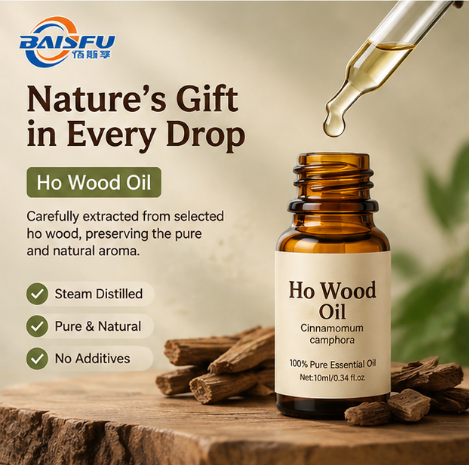
Regarding the extraction process, producers harvest the wood, bark, and twigs of the tree and then subject them to steam distillation. This gentle method preserves the delicate aromatic compounds and ensures maximum linalool retention. Additionally, some operations simultaneously distill the leaves, which further optimizes yield. As a result, the final product emerges as a colorless to pale yellow mobile liquid with a characteristic sweet, slightly floral, and linalolic aroma.
Key Chemical Composition
What truly sets Ho Wood Oil apart is its extraordinary chemical profile. Notably, linalool — a naturally occurring terpene alcohol — dominates the composition, typically accounting for 85 to 97 percent of the oil. In fact, some batches reach nearly 98 percent linalool, making Ho Wood one of the purest natural sources of this valuable molecule available anywhere. Moreover, this near-purity gives the oil a smooth, rounded character without the sharp edges that multi-component oils sometimes carry. To illustrate the full specification, here are the key technical parameters:
- Appearance: Colorless to pale yellow mobile liquid
- Odor: Characteristic, sweet, linalolic, with subtle floral and woody notes
- Specific Gravity (@20°C): 0.856 – 0.865
- Refractive Index (@20°C): 1.460 – 1.464
- Flash Point: >72°C
- Solubility: Insoluble in water; soluble in ethyl alcohol
- Primary Constituent: Linalool (85% – 97%+)
- Plant Family: Lauraceae
- Perfumery Note: Middle note with excellent tenacity
A Sustainable Alternative to Rosewood
One of the most compelling reasons to choose Ho Wood Oil lies in its sustainability story. For decades, the fragrance and cosmetics industries relied heavily on Brazilian rosewood oil (Aniba rosaeodora) as their primary linalool source. However, overexploitation pushed rosewood onto the CITES-protected species list, effectively restricting its commercial use. Consequently, the industry needed a responsible alternative — and Ho Wood Oil answered that call. Because distillers source it from cultivated, fast-growing camphor trees rather than wild-harvested endangered species, the supply chain remains both ethical and scalable. Furthermore, the linalool profile of Ho Wood matches that of rosewood almost identically, so formulators can switch seamlessly without compromising on quality or aroma. In particular, ethical aromatherapy brands now systematically replace rosewood with Ho Wood in their product lines.
Benefits and Applications
Thanks to its exceptionally high linalool content, Ho Wood Oil offers a broad spectrum of functional and sensory benefits. Specifically, linalool demonstrates well-documented antimicrobial, anti-inflammatory, and calming properties in scientific literature. Therefore, formulators across multiple industries find this oil remarkably versatile. Below are the key application areas where Ho Wood Oil excels:
Aromatherapy and Emotional Wellness
Given its linalool richness, Ho Wood Oil functions as a deeply calming and grounding essence. Aromatherapists frequently recommend it for stress relief, anxiety management, and relaxation. Moreover, its gentle, floral-woody scent makes it ideal for diffusion blends aimed at promoting restful sleep and emotional balance. In addition, it blends beautifully with lavender, bergamot, geranium, and sandalwood to create harmonious wellness formulations.
Skincare and Cosmetics
In the realm of skincare, Ho Wood Oil shines as a gentle yet effective active ingredient. Notably, its anti-inflammatory and skin-regenerating properties make it suitable for addressing acne, eczema, minor wounds, and signs of aging. Furthermore, because linalool ranks among the best-tolerated terpene alcohols, the oil works exceptionally well on sensitive skin. Consequently, formulators incorporate it into face serums, creams, lotions, gels, and massage oils at recommended usage rates of 0.5 to 2 percent. Importantly, it also serves as a natural fragrance ingredient that imparts a subtle, elegant scent without overpowering a formulation.
Perfumery
Perfumers value Ho Wood Oil as a sustainable rosewood substitute and as a linalool-rich base that supports floral compositions. Specifically, it adds a woody-floral softness that extends and smooths other notes, functioning as a reliable middle note with excellent tenacity. Therefore, brands committed to ethical sourcing increasingly build their fragrance architectures around this versatile ingredient.
Household and Personal Care Products
Beyond fine fragrances and skincare, Ho Wood Oil finds applications in soaps, natural deodorants, bath products, hair care formulations, and even insect repellents. Moreover, its pleasant aroma and gentle antimicrobial action make it a popular choice for household cleaning products and air fresheners. As consumers continue seeking natural alternatives to synthetic fragrance chemicals, the demand for Ho Wood Oil in this sector will only increase.
Safety and Handling Guidelines
Safety remains a top priority when working with any essential oil, and Ho Wood Oil benefits from an exceptionally favorable safety profile. Specifically, fresh, non-oxidized linalool is non-irritating, non-sensitizing, and non-phototoxic at normal cosmetic concentrations. However, proper storage and handling are essential to maintain this safety profile. Here are the key guidelines to follow:
- Always dilute Ho Wood Oil in a carrier oil before topical application.
- Store the oil in a cool, dark, and sealed container to prevent oxidation.
- Avoid using oxidized oil, as degraded linalool can become a skin sensitizer.
- Consult a qualified healthcare practitioner before use during pregnancy.
- Keep out of reach of children and do not ingest unless directed by a qualified professional.
- Conduct a patch test before applying to sensitive or allergy-prone skin.
- Follow recommended usage rates: 0.5–2% for facial products; 1–2% for body care.
Why Source Ho Wood Oil from Us
As a trusted supplier in the natural ingredients industry, we take pride in offering Ho Wood Oil of consistently high quality. To begin with, we source directly from reputable distillation partners in China who adhere to strict quality standards. Furthermore, every batch undergoes rigorous testing — including gas chromatography analysis — to verify linalool content and purity. In addition, we provide full documentation, including Certificates of Analysis (COA) and Safety Data Sheets (SDS), so our customers can formulate with complete confidence. Ultimately, our commitment to transparency, sustainability, and competitive pricing makes us the ideal partner for your Ho Wood Oil sourcing needs.
Key advantages of working with us include:
- Consistent linalool content of 95% or higher across batches
- Full traceability from tree to final product
- Competitive wholesale pricing with flexible order quantities
- Complete documentation: COA, SDS, and origin certificates available upon request
- Reliable global shipping with temperature-controlled logistics
- Dedicated technical support for formulators and product developers
Get in Touch
Whether you formulate aromatherapy blends, natural cosmetics, fine fragrances, or household products, Ho Wood Oil offers an unbeatable combination of purity, performance, and sustainability. Therefore, we invite you to experience the quality of our Ho Wood Oil (CAS 68648-81-9) firsthand. Simply contact our sales team to request a sample, obtain a quotation, or discuss your specific formulation requirements. Moreover, our experts stand ready to provide technical guidance and help you integrate this remarkable ingredient into your product line. Together, let us bring the natural power of linalool to your customers — sustainably and ethically.